The method
New build or heritage
A rebuilt villa on the Golden Mile and a listed villa on Como are both ten million and are not the same asset. What each costs to buy, to keep and to sell, and which one the market will want in twenty years.

Prime property divides into houses that were built for the buyer and houses that were built for someone else a century ago. The new villa has the plant, the glass, the pool and the warranty; the old one has the proportions, the position and the consents. Buyers tend to have a temperament for one or the other. The market, over twenty years, has a preference too.
New build: what you are paying for
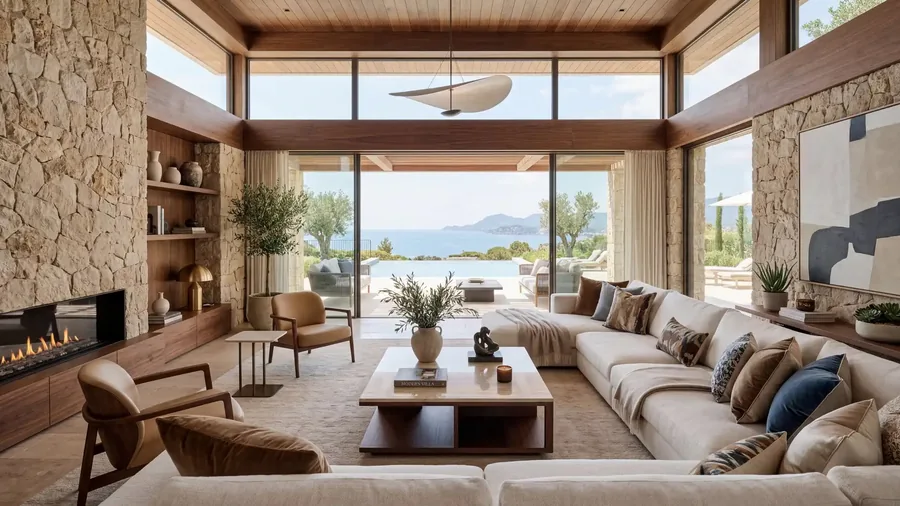
Certainty, mostly. A house completed in the last five years has a plant room that works, insulation, glazing, a pool shell that will not need lining for fifteen years, and a planning file that matches what stands. In Spain it may also carry VAT instead of transfer tax, which above two million in the Balearics is a saving. On the Golden Mile and the Palm and in Dubai Hills the new villa is the market; on the Riviera and Como it is the exception.
What it lacks is scarcity. A contemporary villa on a hillside plot is one of a generation of contemporary villas on hillside plots, and its value depends on the next buyer preferring it to the newer one down the road. The desk prices new build at the plot plus the cost of building, and discounts the rendering.
Heritage: what you are paying for
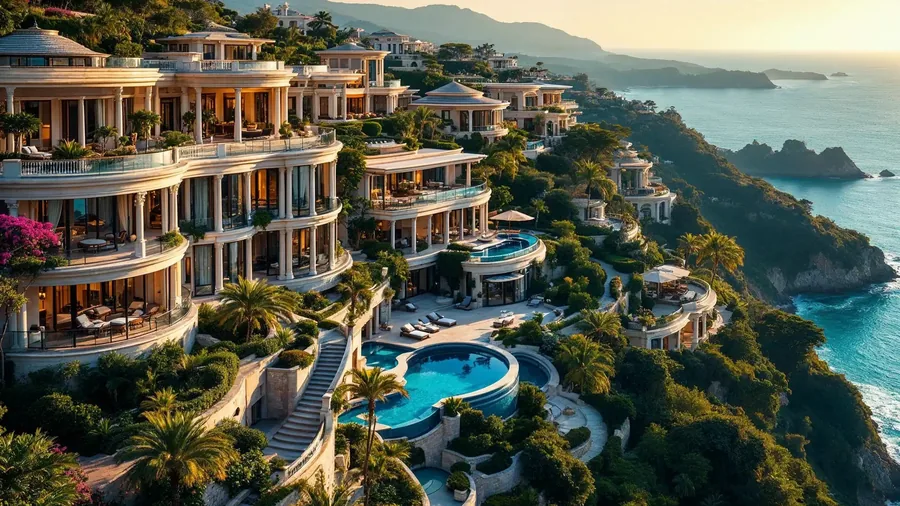
Position, proportion and the fact that it cannot be made again. A belle-époque estate on a cape, a named villa on the Tremezzina, a white villa on the Alster, a thatched house on the Kampen cliff: each sits on land that was chosen first and built on when building there was possible. Consents govern every change and the services are a project. The market for the best of them is closed, private and indifferent to the cycle.
What it costs is time and money after purchase. A year of drawings for a year of works under a heritage authority; a roof; the electrics of a house that was wired in 1960. The holding instrument with the reserve set honestly is the first thing to run, and the second is the exit, because a restored heritage house in a closed market sells to a collector at a premium the new villa never earns.
A new villa is a finish on a plot. An old villa is a position with a house on it. The plot and the position are the asset; the rest is maintenance.
How the desk prices bothThe buyer's temperament
The new-build buyer wants to arrive with a suitcase and have everything work, and is content to be one of many with a better view. The heritage buyer wants the thing nobody else can have and is prepared to spend two years and a fortune to get it right. Both are reasonable. The mistake is buying the other one: a collector in a hillside villa is bored by the second summer, and a relocator in a listed villa is on first-name terms with the heritage officer by the second winter.
A third way
The rebuild: an old house on a great plot, bought for the position and the rights, replaced on the footprint with consent. It is how the best new houses in the Mallorca southwest, on the Golden Mile and on the Palm were made, and it is where the planning file is the whole value. A plot with a large permitted volume and a tired house on it is, in a market that has stopped building, the best asset there is.
Run the numbers
Holding Costs
What a house costs every year you own it, from property tax to the gardener, in each hotspot.