 The places
Residency and property
Where a house still comes with a right to stay, where it never did, and the four markets that have a fence around them. The rules as they stand, and what changed.
Portugal · Portugal
A capital that was cheap fifteen years ago and is not any more, and an hour south of it a coast of pine, dune and rice paddy that has become the most discreet address in Iberia. The two markets share a currency, a tax code and almost nothing else.
The Ranesta Index
Editorial estimate of prime asking bands, September 2026. Not a valuation. Typical entry €2.0 m, trophy from €15 m. Prime marketing time about 150 days.
Where exactly
The short version
Lisbon is a normal European capital again: liquid, well served by agents, priced within reach of Paris and Madrid, and no longer the discount it was. The prime market in Chiado and Príncipe Real trades every week; off-market is a third of sales at most, because supply is deep and buyers are many.
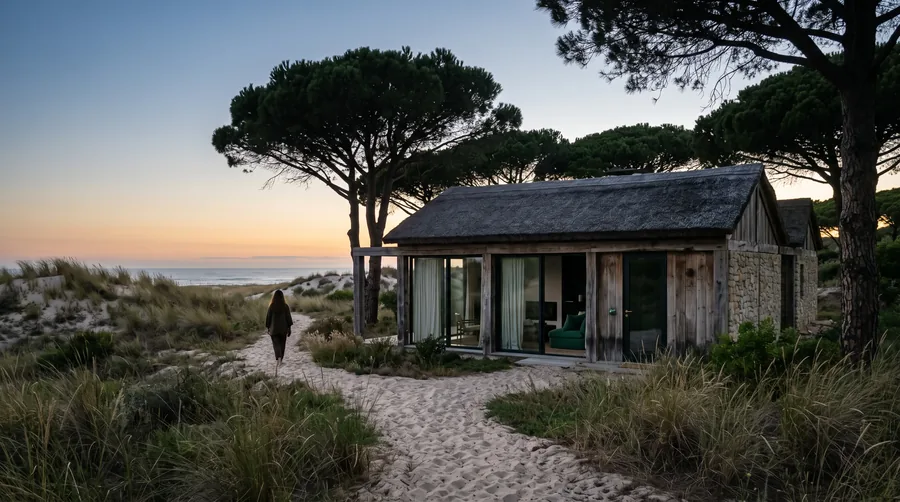
Comporta is the opposite. A stretch of coast an hour south that was rice fields and fishermen's cabins twenty years ago and is now the address that European fashion and design money prefer to Ibiza, precisely because there is nothing there. Building is close to impossible outside the handful of licensed estates, and what exists changes hands between people who know each other. The desk has never seen a Comporta house it wanted on a portal.
The tax code is the same for both and is the thing that changed. The property golden visa is gone, the non-habitual resident regime has been replaced by a narrower one, and capital gains for non-residents are now taxed on half the gain at progressive rates. Portugal still works; it no longer works automatically.
Worth knowing
Who is buying
French and Brazilians in the capital, Americans since 2020, Germans and Scandinavians on the Cascais coast, and a small, very specific set of European buyers in Comporta who arrive by introduction.
What the desk is working on
Whole palaces in Lapa and Príncipe Real, villas with a garden in Cascais, and anything licensed behind the dunes of Comporta or Melides. The desk's Comporta mandates outnumber the houses by a wide margin.
Buying notes
The promissory contract binds with a deposit of ten to thirty per cent; completion at the notary. Costs for a purchase above 1.1 million run at about 9.3 per cent all in. A Portuguese tax number is required before the contract. In Comporta the licence and the energy certificate of a cabin are the whole value, and both are checked before the promissory.
In the private portfolio
 RN-0418 · Lisbon & Comporta
Comporta estate behind the dunes
Twelve hectares of pine and cork with a licensed house and a path to the beach.
5 bedrooms480 m²120,000 m² plot
€8.0 m to 10 mReference RN-0418
RN-0418 · Lisbon & Comporta
Comporta estate behind the dunes
Twelve hectares of pine and cork with a licensed house and a path to the beach.
5 bedrooms480 m²120,000 m² plot
€8.0 m to 10 mReference RN-0418
 RN-0407 · Lisbon & Comporta
Palace floor in Lapa
The piano nobile of an eighteenth-century palace in the embassy quarter, restored with its ceilings.
4 bedrooms410 m²
€4.5 m to 5.2 mReference RN-0407
RN-0407 · Lisbon & Comporta
Palace floor in Lapa
The piano nobile of an eighteenth-century palace in the embassy quarter, restored with its ceilings.
4 bedrooms410 m²
€4.5 m to 5.2 mReference RN-0407
The hotspot vote
Questions buyers ask
Against Paris and London, yes. Against its own price ten years ago, no. Prime Lisbon now trades at a level where the yield rather than the discount is the argument, and the yield is a fair four per cent.
Because almost nothing can be built and the people who own what exists rarely need to sell. Houses surface through architects, lawyers and neighbours. A registered mandate and patience are the method.
The real estate route closed in October 2023. Investment funds and other routes remain, and the ordinary residence visas work for people who intend to live in Portugal. Buy the house for the house.
Non-residents pay tax on half the gain at progressive rates, which for a large gain approaches a quarter of the whole gain. The exit instrument has the Portuguese rule built in.
Read next
The places
Where a house still comes with a right to stay, where it never did, and the four markets that have a fence around them. The rules as they stand, and what changed.
 The numbers
Capital gains rules differ more than prices do: nothing in Monaco and Dubai, nothing after ten years in Germany, a flat thirty in Austria, a taper in France. The exit is the part of the return most buyers never model.
The Private Letter
One letter a month: what moved in the hotspots, one anonymised sale explained, one number worth knowing. No advertising, no tracking, one click to leave.