RanestaExclusive Real Estate
DE
Côte d'Azur, France

French Riviera · France

Côte d'Azur

The oldest luxury coast in the world and still the one with the widest price range: from a village house in the hills to a cape estate that trades once a generation and never in public. The Riviera is where the blind listing was invented.

The Ranesta Index

€15,000 to 40,000
Prime band, per m²
€70,000
Trophy, per m²
2.0 to 3.0%
Gross yield
60%
Sold off-market
8.0%
Cost to acquire
1.1%
Cost to hold, a year

Editorial estimate of prime asking bands, September 2026. Not a valuation. Typical entry €5.0 m, trophy from €100 m. Prime marketing time about 300 days.

Where exactly

Saint-Jean-Cap-Ferrat and Villefranche
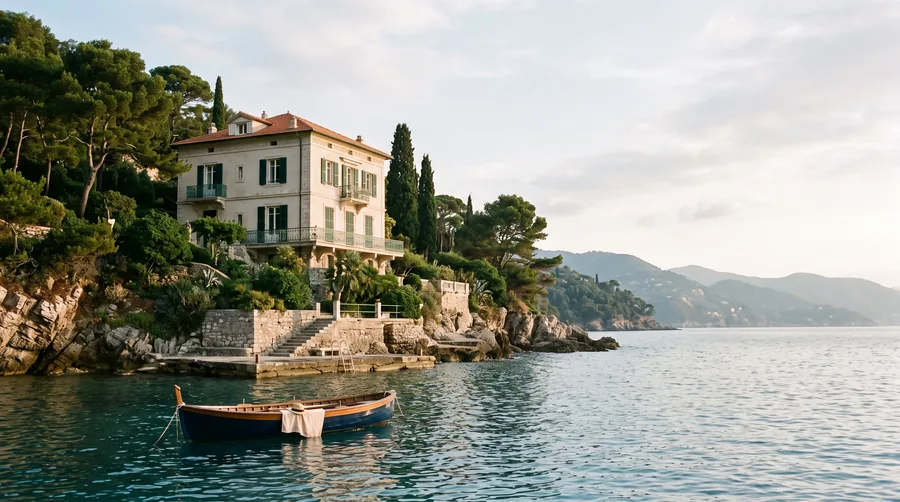
The peninsula: perhaps eighty significant estates, most held for decades, a handful changing hands a year at prices that are never confirmed. Forty to seventy thousand a square metre is the working assumption for the water.
Cap d'Antibes and Juan-les-Pins
Larger plots, more of them, a slightly quieter clientele. The west side of the cape sees the sunset and prices accordingly.
Saint-Tropez and Ramatuelle
The peninsula behind the port: Les Parcs, La Moutte, the domaines of Ramatuelle. A summer market, gated where it can be, with the highest weekly rents in France.
Cannes Californie, Mougins and the hills
The belle-époque villas above Cannes and the golf estates behind them. The most reasonable entry to the coast and the market that trades most regularly.

The short version

A coast in three markets

The Riviera is not one market. The capes, Ferrat and Antibes, are a closed club of estates that trade by introduction between families who have known each other for two generations; a listing there is a sign that something has gone wrong. Saint-Tropez is a summer economy where the house is priced by the rent it can earn in July. The hills above Cannes and Nice are a normal prime market with agents, portals and comparables.

What the three share is the French system, which is slower, more expensive to hold and more predictable than the Spanish one. The notary is neutral, the deposit period gives the buyer ten days to walk away, and the wealth tax on real estate is the number that decides how long people keep their houses.

The trophy assets are the water frontages on the capes, and they are as scarce as anything in the world. The desk has watched three sales on Cap Ferrat in two years and none of them had a brochure.
Worth knowing

Acquisition costs on a resale
About 7.5 per cent in notary fees and duties, and the agency fee is usually inside the displayed price
Wealth tax on real estate
IFI applies to net property above 1.3 million, at rates from 0.5 to 1.5 per cent, to non-residents on their French property
Capital gains
19 per cent plus social charges, tapering to nothing after 22 years for the tax and 30 for the charges
Second-home surcharge
The taxe d'habitation on second homes carries a surcharge of up to 60 per cent in most of the coast's communes
Ownership
Through a French civil company, an SCI, in most cases above three million
Notary
Handles the sale; the buyer appoints their own, at no extra cost, and should

Who is buying

Everybody, which is the point. Old European money on the capes, Gulf and Russian-diaspora money in the domaines, Americans in Saint-Tropez, and the Scandinavians and Swiss in the hills. The French themselves buy in Mougins and Valbonne.

What the desk is working on

Any waterfront on the two capes, domaines in Ramatuelle with a letting record, and belle-époque houses above Cannes that need work. The desk holds a blind instruction on Cap Ferrat that will not be described further on this page.

Buying notes

The compromis de vente is binding after a ten-day cooling-off period for the buyer; the deposit is five to ten per cent. Costs are around eight per cent all in. Buy through an SCI if the house will pass to children, and have the IFI modelled before the offer, because for a fifteen-million house it is a six-figure annual number.

Open buyer mandates

  • M-121A family seeks water frontage on Cap Ferrat or Cap d'Antibes, budget on request, and will sign an NDA and evidence funds within forty-eight hours.

Questions buyers ask

On a fifteen-million house with no debt, roughly 150,000 a year, every year. Debt secured on the house reduces the base, which is why most estates on the coast carry a mortgage the owner does not need.

Yes. A serious buyer registers with two or three people and waits. Estates surface when a family changes generation, and the first call goes to buyers who are known to be ready. That is the whole mechanism.

Saint-Tropez if the house should earn in the summer and be full of people; the capes if it should be quiet and hold value for thirty years. They attract different buyers and the prices behave differently.

Three to four months from the offer to the keys, driven by the notary's searches and the pre-emption rights of the commune. Faster is possible; faster is rarely wise.

Read next

The exit, decided at purchaseThe numbers

The exit, decided at purchase

Capital gains rules differ more than prices do: nothing in Monaco and Dubai, nothing after ten years in Germany, a flat thirty in Austria, a taper in France. The exit is the part of the return most buyers never model.

The Private Letter

One letter a month.

One letter a month: what moved in the hotspots, one anonymised sale explained, one number worth knowing. No advertising, no tracking, one click to leave.