
 The private market
Selling quietly
How a family sells a house without a photograph in circulation, why it is often the better price, and what it asks of the seller in return.
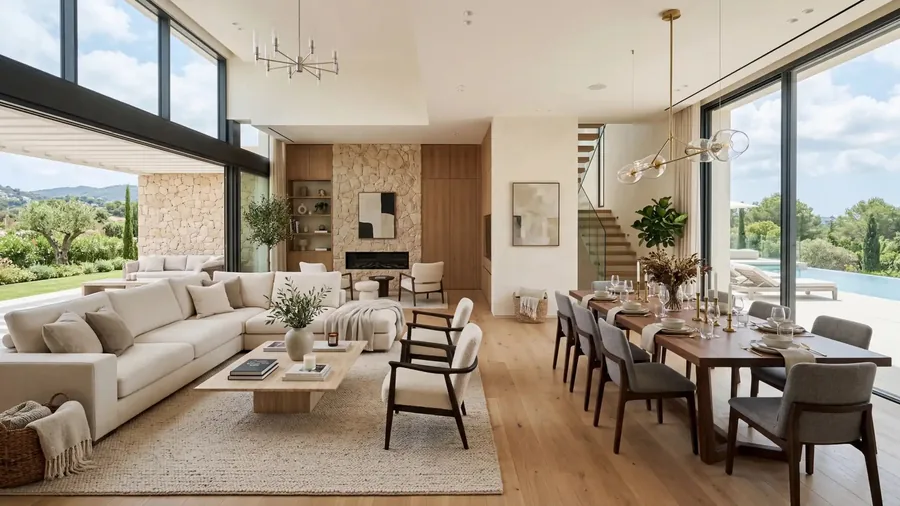
North Sea · Germany
A sandbar in the North Sea with the highest prices per square metre in Germany and a thatched-roof code that has made the island a stock of houses that can only ever be replaced with the same house. Sylt is the country's Hamptons, and the desk treats it as an island of whispers.
The Ranesta Index
Editorial estimate of prime asking bands, September 2026. Not a valuation. Typical entry €4.0 m, trophy from €30 m. Prime marketing time about 200 days.
Where exactly
The short version
Sylt has a building code that in effect forbids the future. In Kampen and Keitum a house must be thatched, must keep Frisian proportions and may be replaced only by a house of the same volume on the same footprint. The consequence is that the island cannot grow, the houses cannot get bigger, and the value of a plot is the right to keep doing what has been done on it since the fifties.
Prices are the highest in Germany by a wide margin, and the buyer base is the country's industrial and media wealth: Hamburg, Düsseldorf, Munich and the Rhineland families who have summered here for three generations. Half of prime sales are private, arranged over the winter through the island's few agents and the lawyers in Hamburg who represent the families.
The German rules apply with the country's highest transfer tax, which with the agent's split makes Sylt the most expensive of the German markets to enter. The ten-year exemption makes it clean to leave. Nobody leaves.
Worth knowing
Who is buying
German families almost exclusively: Hamburg and the north, the Ruhr and the Rhineland, Munich. A few Danes and Swiss. Foreign buyers from further away are rare and would be an event.
What the desk is working on
Thatched houses on the cliff at Kampen, Frisian houses on the Watt at Keitum, and plots anywhere in the two villages with a rebuild right. The desk's Sylt mandates have waited longer than any others on its books.
Buying notes
Notarial deed, binding at signature; twelve per cent all in with the transfer tax, the notary and the agent's share. The building file of a thatched house is the most important document in the sale: what was permitted, what was built, and what may be rebuilt. The desk reads it with a Sylt architect before any offer.
Open buyer mandates
Questions buyers ask
Kampen for the sea, the cliff and the price; Keitum for the Watt, the old village and the summer that lasts. Frontline in Kampen is the trophy; a Keitum captain's house is the one people keep for sixty years.
Schleswig-Holstein sets it at six and a half per cent for the whole state, and Sylt happens to be in it. It is the price of admission to an island with no other tax to speak of and a ten-year capital gains exemption on the way out.
Almost never. The code allows replacement of the existing volume, and the value of a house is often the volume it has rather than the house it is. An old house with a large permitted footprint is worth more than a new one with a small one.
Over the winter, through the island's agents and the families' lawyers, before anything is written down. A buyer known to be ready hears about a house in October and signs at a Hamburg notary in February. The desk is that buyer's route.
Read next
The private market
How a family sells a house without a photograph in circulation, why it is often the better price, and what it asks of the seller in return.
 The numbers
Capital gains rules differ more than prices do: nothing in Monaco and Dubai, nothing after ten years in Germany, a flat thirty in Austria, a taper in France. The exit is the part of the return most buyers never model.
The Private Letter
One letter a month: what moved in the hotspots, one anonymised sale explained, one number worth knowing. No advertising, no tracking, one click to leave.