
 The places
Residency and property
Where a house still comes with a right to stay, where it never did, and the four markets that have a fence around them. The rules as they stand, and what changed.
Principality · Monaco
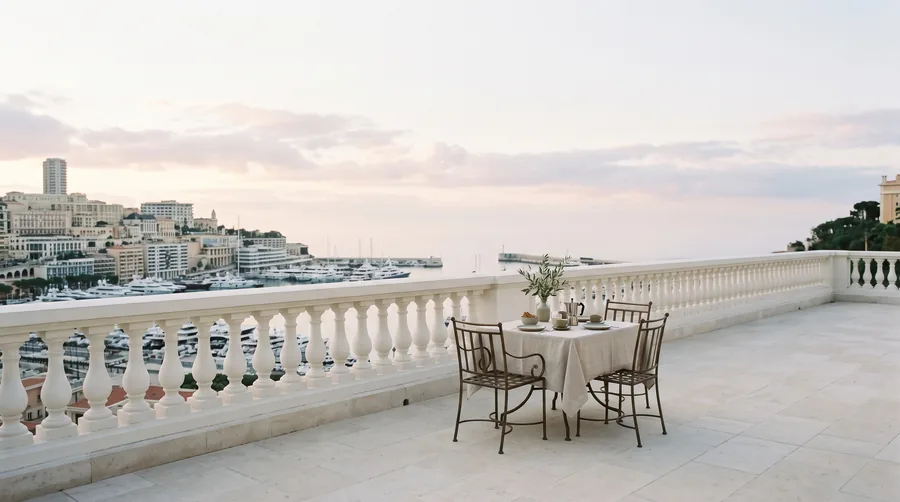
Two square kilometres, no income tax, no capital gains tax for most residents and the highest prices per square metre in the world. Monaco is not a property market with a tax regime attached; it is a tax regime with a property market attached, and the market behaves accordingly.
The Ranesta Index
Editorial estimate of prime asking bands, September 2026. Not a valuation. Typical entry €5.0 m, trophy from €100 m. Prime marketing time about 240 days.
Where exactly
The short version
People do not buy in Monaco to own a beautiful apartment. They buy to live somewhere with no income tax, no wealth tax and no capital gains tax, and the apartment is the price of admission. That is why the market has held its value through every cycle: demand is driven by tax residents of the world deciding where to be resident, and that demand has only ever grown.
The result is a market of extraordinary depth and very small floor plans. Two hundred square metres in the Carré d'Or is a family apartment. Buyers from London or New York arrive with a budget that buys a house there and an apartment here, and the ones who adjust fastest are the ones who understand that they are buying a jurisdiction.
Off-market is the norm rather than the exception. Two thirds of significant sales close between the handful of agencies that hold the Principality's instructions and the buyers on their books. A registered mandate with evidence of funds is not a nicety here; it is the ticket.
Worth knowing
Who is buying
People becoming resident, which is a category rather than a nationality: British, Italian, Scandinavian, Swiss, Middle Eastern, increasingly American. The buildings hold a few hundred families who could live anywhere and chose this.
What the desk is working on
Anything above 150 square metres with a terrace in the Carré d'Or or Larvotto, and whole floors in the belle-époque buildings. The desk will not propose Monaco to a buyer who has not first decided on residency.
Buying notes
The purchase runs through a Monegasque notary; costs are roughly ten per cent all in for an individual buyer. There is no capital gains tax on resale and no annual property tax. Residency is a separate application with the Sûreté Publique, and the desk introduces the bank and the adviser before the apartment.
The hotspot vote
Questions buyers ask
For residents who are not French nationals, there is no personal income tax, no wealth tax and no capital gains tax. Companies pay corporate tax on certain income. The trade-off is the price of the apartment and the cost of living, both of which are the highest in Europe.
A lease satisfies the residency requirement and most new residents rent for a year first. Buying makes sense once the family has decided this is where it lives; the market rewards patience, and the best apartments come to people who are already here.
A penthouse with a terrace on the sea at Mareterra or in one of the two or three towers that set the ceiling. Those sales are rare, private and confirmed only by the buildings themselves.
Around two per cent gross. Nobody buys in Monaco for yield; they buy to stop paying tax elsewhere. Run the exit instrument with the Monaco rules and the return arrives from a different direction.
Read next
The places
Where a house still comes with a right to stay, where it never did, and the four markets that have a fence around them. The rules as they stand, and what changed.
 The private market
The buyers who have quietly become the top of every hotspot: how a family office buys a house, what it wants from a desk, and why sellers prefer it.
The Private Letter
One letter a month: what moved in the hotspots, one anonymised sale explained, one number worth knowing. No advertising, no tracking, one click to leave.